
On This Day
May 2 in History
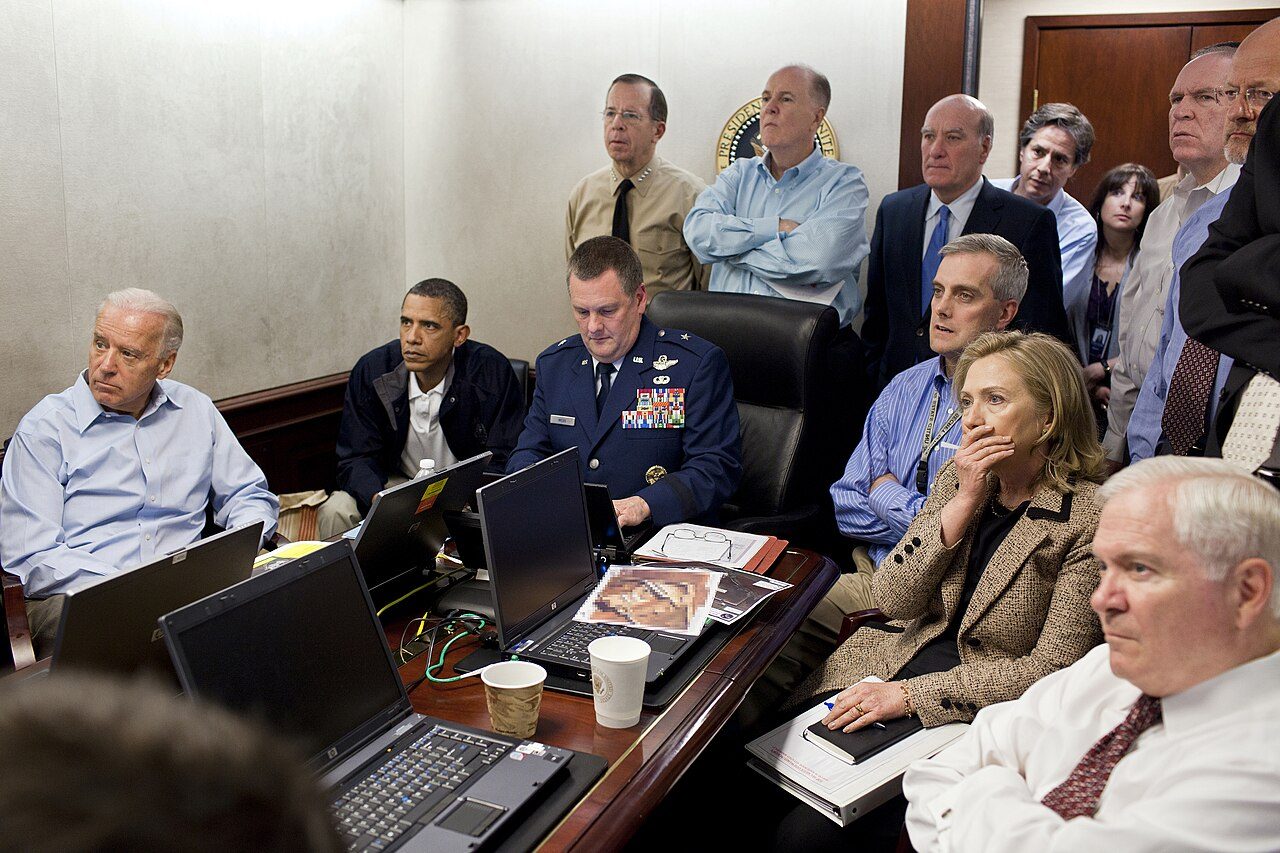
In the early hours of 2 May 2011, Pakistan time, United States Navy SEALs raided a walled compound in Abbottabad and killed Osama bin Laden, the founder of al-Qaeda and the man behind the September 11 attacks — ending the longest manhunt in American history. May 2 is also the day Anne Boleyn was sent to the Tower in 1536, the King James Bible was published in 1611, and Leonardo da Vinci died in 1519.
Choose another date: open the On This Day calendar to browse events, births and deaths for any day of the year.
At a Glance
- The target
- Osama bin Laden, founder of al-Qaeda, hiding in a compound in Abbottabad, about 30 miles northeast of Islamabad
- The operation
- Operation Neptune Spear, authorised by President Barack Obama on 29 April 2011
- The raid
- 23 SEALs flew from Jalalabad, Afghanistan, in two stealth-modified Black Hawk helicopters; the raid took about 40 minutes
- The toll
- Five people died in the raid, including bin Laden and one of his sons
- The announcement
- Obama announced the killing at 11:35 p.m. Washington time on 1 May — already 2 May in Pakistan
- The burial
- Bin Laden's body was flown to the carrier USS Carl Vinson and buried in the Arabian Sea
Events on this day
- 1536Anne Boleyn, Henry VIII's second queen, is committed to the Tower of London on charges of adultery and incest; she is beheaded 17 days later.
- 1611The King James Version of the Bible is first published in London, the translation that shapes English prose for centuries.
- 1803The Louisiana Purchase is concluded: the United States buys some 828,000 square miles from France for $15 million, doubling its size.
- 1889Menilek II of Ethiopia signs the Treaty of Wichale with Italy, a pact whose disputed text helps lead to war between the two countries.
- 1920The Negro National League, founded by Rube Foster, plays its first game — the first successful professional baseball league for Black Americans.
- 1939Lou Gehrig ends his streak of 2,130 consecutive games for the New York Yankees; the record stands until Cal Ripken Jr. breaks it in 1995.
- 1946Six inmates attempt to escape from Alcatraz prison, beginning two days of fighting remembered as the Battle of Alcatraz.
- 2000President Bill Clinton announces that accurate GPS signals will be made fully available to the public, ending their deliberate degradation.
- 2011Osama bin Laden is killed by U.S. forces in Abbottabad, Pakistan — the featured story above.
- 2015Princess Charlotte, second child of the Prince and Princess of Wales, is born in London.
Born on this day
- 1729Catherine the Great — German-born empress of Russia whose reign expanded the empire and patronised the Enlightenment.
- 1859Jerome K. Jerome — English comic writer, author of Three Men in a Boat.
- 1892Manfred von Richthofen — Germany's leading First World War fighter ace, the Red Baron.
- 1903Benjamin Spock — American paediatrician whose Common Sense Book of Baby and Child Care sold more than 50 million copies.
- 1921Satyajit Ray — Bengali film director whose Apu Trilogy brought Indian cinema to world attention.
- 1942Jacques Rogge — Belgian sailor and surgeon who served as president of the International Olympic Committee.
Died on this day
- 1519Leonardo da Vinci — Italian painter, engineer and anatomist, dead at Clos Luce in France at 67.
- 1957Joseph McCarthy — American senator whose anti-communist campaigns gave the language the word McCarthyism, dead at 48.
- 1997Paulo Freire — Brazilian educator and author of Pedagogy of the Oppressed, dead in Sao Paulo at 75.
- 2011Osama bin Laden — founder of al-Qaeda, killed by U.S. forces in Abbottabad at 54.
- 2015Ruth Rendell — English crime novelist, creator of Inspector Wexford, dead in London at 85.
The featured story: Osama bin Laden is killed, 2 May 2011
For almost ten years after the September 11 attacks of 2001, Osama bin Laden was the most wanted man in the world, and for most of that time he seemed unfindable. The trail that finally led to him ran not through a cave in Afghanistan but through a courier. As the Central Intelligence Agency recounts, its officers identified a trusted courier, Abu Ahmed al-Kuwaiti, and followed that thread to a large, unusually guarded compound in Abbottabad, a garrison town in northern Pakistan. The compound had high walls, little contact with the outside world and residents who burned their rubbish rather than put it out — small facts that, assembled, pointed to a very important fugitive.
President Barack Obama authorised the raid, Operation Neptune Spear, on 29 April 2011, choosing a helicopter assault by special forces over bombing, which could not have confirmed the target's identity. On the night of 1–2 May, 23 members of SEAL Team 6 flew from Jalalabad in Afghanistan in two stealth-modified Black Hawk helicopters. One helicopter clipped a wall and crash-landed inside the compound; nobody was killed in the crash, and the SEALs continued on foot, clearing the buildings floor by floor. In a third-floor room they found and shot bin Laden. The whole raid took about forty minutes. Four other people died, among them the courier and one of bin Laden's sons.
Bin Laden's body was flown first to Afghanistan, where it was positively identified, and then to the aircraft carrier USS Carl Vinson, from which he was buried in the Arabian Sea within a day of his death, in a rite the United States said followed Islamic practice. In Washington, Obama announced the killing in a televised address late on 1 May — it was already the small hours of 2 May in Pakistan — saying that the United States had conducted an operation that killed the leader of al-Qaeda. Crowds gathered outside the White House and at Ground Zero in New York. Al-Qaeda confirmed the death on 6 May and vowed revenge.
The killing closed the central chapter of the post-9/11 era without ending the movement bin Laden had founded: al-Qaeda's affiliates, and later the rival Islamic State group, fought on. It also opened hard questions — about how the world's most wanted man had lived for years beside a Pakistani military academy, about torture's role in the intelligence trail, and about a raid carried out without Pakistan's knowledge or consent. But as an operation of intelligence and arms, Abbottabad was the manhunt's end: a search that began in the ruins of 2001 finished, ten years on, in a quiet suburb before dawn.
Why this date matters
May 2 is a date of endings arranged around one long beginning. The King James Bible of 1611 began a four-century life in the language; the Louisiana Purchase of 1803 began the continental United States; and against those openings stand the day's closures — a queen sent to the Tower, Leonardo's death in exile, and, in 2011, the end of the hunt for the author of September 11. It is a date that measures how long consequences run: a translation outlives its translators, a land sale outlives its sellers, and a manhunt, however long, eventually arrives.
Sources
- Encyclopaedia Britannica — On This Day: May 2
- HISTORY — What Happened on May 2
- Central Intelligence Agency — The Final Chapter in the Hunt for Bin Ladin
- Encyclopaedia Britannica — Killing of Osama bin Laden
The facts on this page were checked against these sources on 19 November 2026. The History Trail's permanent pages are researched and written for this site; the live profiles elsewhere on The History Trail are assembled automatically from Wikipedia and Wikidata.
About the Author
Researched and written by the The History Trail Editorial Team — the accountable editorial function behind this site's permanent story pages. The team works from the published sources cited on each page; it does not invent historians, reviewers or credentials, and it corrects errors openly.
Fact Check
Every load-bearing fact on this page traces to one of the sources listed above, and significant claims link to their source in the text. Our checking method is described on the methodology page; errors can be reported via the corrections page.
Sources & Citations
Cite this page as: The History Trail Editorial Team, The History Trail — this article's title, publication and update dates are shown beneath its headline. The full source list appears under Sources above; the site's source standards are on the sources page.