
On This Day
June 29 in History
On the afternoon of 29 June 1613 a stage cannon set the thatch alight at Shakespeare's Globe, and the most famous theatre in the world burned to the ground in under an hour — with no loss of life. June 29 is also the day Brazil won its first World Cup behind the teenage Pele, the Interstate Highway System was created, and the first iPhone went on sale.
Choose another date: open the On This Day calendar to browse events, births and deaths for any day of the year.
At a Glance
- The theatre
- The Globe on Bankside, London, built in 1599 by Shakespeare's company, the Lord Chamberlain's Men
- The play
- Henry VIII, performed under the title All Is True, on 29 June 1613
- The cause
- Stage cannon fired for the king's entrance set fire to the thatched roof with their wadding
- The casualties
- None recorded; one spectator's burning breeches were doused with bottled ale
- The rebuild
- A grander second Globe, roofed with tile, opened on the same site within a year
- The modern Globe
- Sam Wanamaker's reconstruction opened in 1997, a few hundred yards from the original site
Events on this day
- 1613Shakespeare's Globe Theatre in London burns to the ground during a performance of Henry VIII — the featured story above.
- 1881In Sudan, Muhammad Ahmad proclaims himself the Mahdi, launching the revolt that will take Khartoum.
- 1916Roger Casement, the British diplomat turned Irish nationalist, is sentenced to death for his part in the Easter Rising.
- 1927The Bird of Paradise, a United States Army Fokker trimotor, completes the first flight from the American mainland to Hawaii.
- 1950A team of American amateurs defeats England 1–0 at the World Cup in Brazil, one of football's greatest upsets.
- 1956President Eisenhower signs the Federal Aid Highway Act, creating the United States Interstate Highway System.
- 1956Marilyn Monroe marries the playwright Arthur Miller in a brief civil ceremony in New York state.
- 1958Brazil beats Sweden 5–2 to win its first World Cup, with two goals from the 17-year-old Pele.
- 1972In Furman v. Georgia, the United States Supreme Court rules the death penalty, as then applied, unconstitutional.
- 1974Isabel Peron succeeds her husband as president of Argentina, the first woman to head a South American state in the modern era.
- 1995The space shuttle Atlantis docks with Russia's Mir station, the first shuttle-Mir docking of the post-Cold War programme.
- 2007Apple's first iPhone goes on sale in the United States.
- 2009Bernie Madoff is sentenced to 150 years in prison for the largest Ponzi scheme in history.
Born on this day
- 1900Antoine de Saint-Exupery — French aviator and author of The Little Prince, lost on a reconnaissance flight in 1944.
- 1901Nelson Eddy — American singer and film baritone, partner of Jeanette MacDonald in a series of operettas.
- 1910Frank Loesser — American songwriter of Guys and Dolls and the wartime hit 'Praise the Lord and Pass the Ammunition'.
- 1911Bernard Herrmann — American composer, Hitchcock's musical collaborator and the scorer of Psycho's shrieking strings.
- 1920Ray Harryhausen — American stop-motion animator whose skeletons and monsters defined fantasy cinema.
- 1945Chandrika Bandaranaike Kumaratunga — Sri Lankan politician, the country's first woman president.
Died on this day
- 1520Moctezuma II — the Aztec emperor, dead in Tenochtitlan during the Spanish invasion, in circumstances still disputed.
- 1895Thomas Henry Huxley — English biologist, 'Darwin's bulldog' and coiner of the word agnostic, dead at 70.
- 1967Jayne Mansfield — American actress, killed in a car crash in Louisiana at 34.
- 1995Lana Turner — American actress, the 'Sweater Girl' turned dramatic star of The Postman Always Rings Twice.
- 2002Rosemary Clooney — American singer and actress of 'Come On-a My House' and White Christmas.
- 2003Katharine Hepburn — American actress, winner of four Academy Awards for Best Actress, dead at 96.
The featured story: the Globe Theatre burns down, 29 June 1613
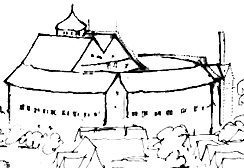
On 29 June 1613, during a performance of Shakespeare's Henry VIII — staged under its contemporary title, All Is True — the Globe Theatre in London caught fire and burned to the ground. HISTORY's entry for the day is laconic: the Globe, where most of Shakespeare's plays debuted, burned down on 29 June 1613. The mechanism is known in unusual detail, because a letter-writer, Sir Henry Wotton, described it: stage cannon, fired to mark the king's entrance, discharged their wadding into the theatre's thatched roof. The straw caught, smouldered almost unnoticed for a while — the audience's attention was on the play — and then, in Wotton's account, ran round the building in less than an hour, consuming the whole wooden house.
The Globe had stood on Bankside, south of the Thames, for fourteen years. It was built in 1599 by the Lord Chamberlain's Men, Shakespeare's company, largely from the timbers of an earlier playhouse dismantled and ferried across the river in a property dispute. An open-air polygon holding perhaps 3,000 people — a penny to stand in the yard, more for the galleries — it was the stage of Hamlet, Othello, King Lear and Macbeth, and the centrepiece of the first great commercial theatre district in Europe. Shakespeare was a shareholder in the building as well as its house playwright, so the fire burned his money as well as his stage: he held a one-fourteenth share in the Globe's profits.
Remarkably, nobody died. The contemporary reports record a full house escaping through two narrow doors, and one man whose breeches caught fire and were doused, in the famous phrase of the letter-writers, with bottled ale. The theatre's destruction was total — 'nothing but timbers', as one account put it — but the company's nerve held. The Globe was rebuilt on the same foundations within a year, grander than before and, pointedly, roofed with tile instead of thatch. Shakespeare himself was near the end of his career: Henry VIII, written with John Fletcher, was among his last plays, and he retired to Stratford, where he died in 1616, having sold or settled his theatre shares as the second Globe rose.
The second Globe played on until Parliament closed the theatres in 1642, and was demolished soon after; the site was lost under later building for three centuries. Its resurrection came from an American actor, Sam Wanamaker, who campaigned for decades to rebuild it near the original spot. Shakespeare's Globe, a scholarly reconstruction in oak and thatch — the first thatched roof permitted in London since the Great Fire — opened in 1997, a few hundred yards from where the cannon fired in 1613. The play that burned the original is still performed there, though the cannon, these days, are fired with more care.
Why this date matters
June 29 is a day of stages and the crowds on them. Shakespeare's theatre burned with a full house watching a king's entrance; Pele announced himself on the world's largest stage at seventeen; Brazil, Argentina, Sudan and the United States all refounded something in public — a highway system, a presidency, a Mahdist state, a phone that put the stage in every pocket. Its legal entry is as theatrical as its fires: a Supreme Court halting executions with a one-paragraph ruling per judge in Furman. The date's pattern is performance under pressure, and what survives the fire: the Globe rebuilt in tile within a year, its plays outliving every building built to hold them.
Sources
- Encyclopaedia Britannica — On This Day: June 29
- HISTORY — What Happened on June 29
- Encyclopaedia Britannica — Globe Theatre
- Shakespeare's Globe — The Globe Theatre
The facts on this page were checked against these sources on 19 November 2026. The History Trail's permanent pages are researched and written for this site; the live profiles elsewhere on The History Trail are assembled automatically from Wikipedia and Wikidata.
About the Author
Researched and written by the The History Trail Editorial Team — the accountable editorial function behind this site's permanent story pages. The team works from the published sources cited on each page; it does not invent historians, reviewers or credentials, and it corrects errors openly.
Fact Check
Every load-bearing fact on this page traces to one of the sources listed above, and significant claims link to their source in the text. Our checking method is described on the methodology page; errors can be reported via the corrections page.
Sources & Citations
Cite this page as: The History Trail Editorial Team, The History Trail — this article's title, publication and update dates are shown beneath its headline. The full source list appears under Sources above; the site's source standards are on the sources page.