
On This Day
July 17 in History
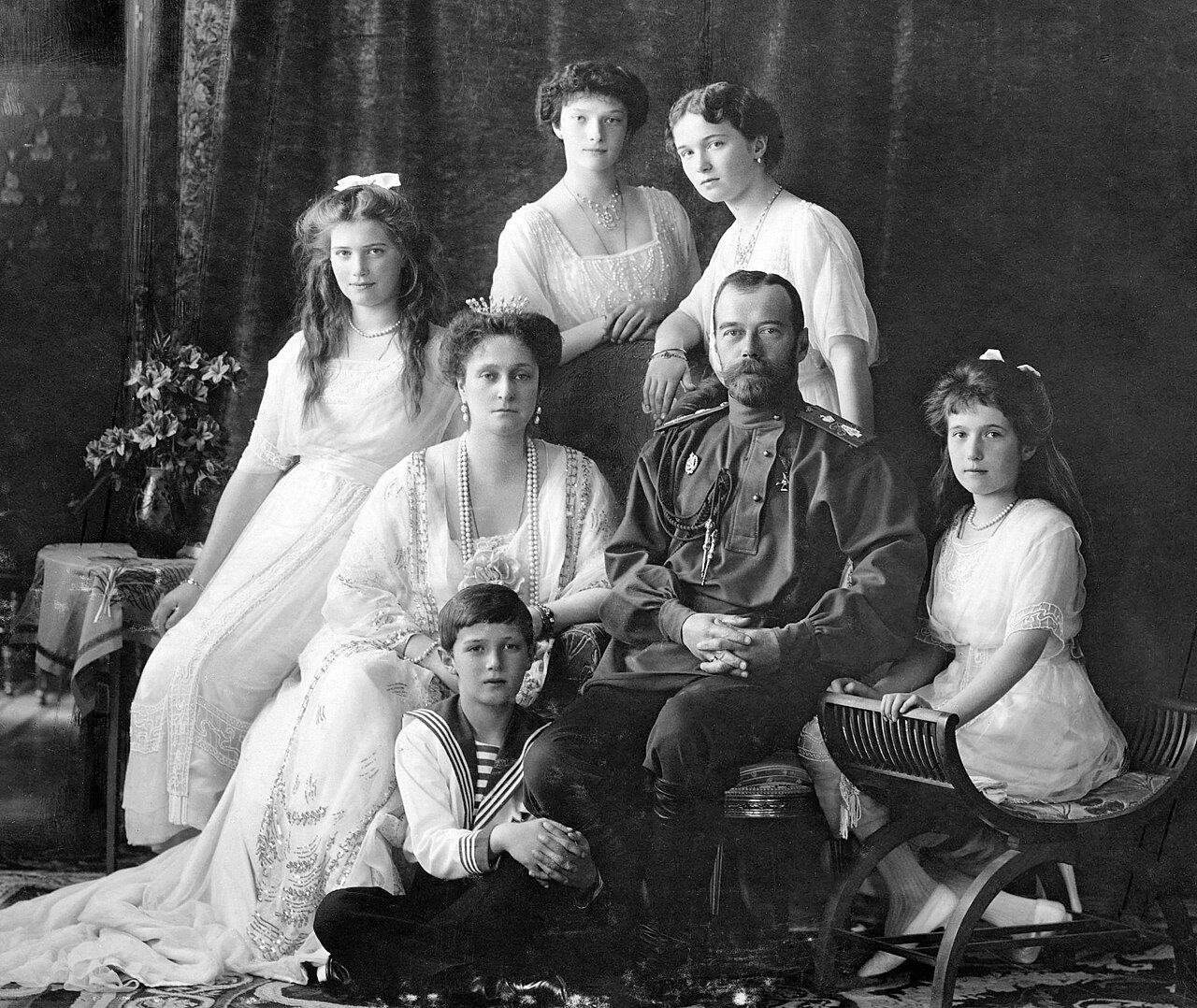
In the early hours of 17 July 1918, in a basement room in Yekaterinburg, Bolshevik guards shot and bayoneted Nicholas II, the former tsar of Russia, his wife Alexandra and their five children — ending three centuries of Romanov rule. July 17 is also the day Disneyland opened, the Spanish Civil War began, and Apollo and Soyuz shook hands in orbit.
Choose another date: open the On This Day calendar to browse events, births and deaths for any day of the year.
At a Glance
- The place
- The basement of the Ipatiev House, Yekaterinburg, in the Urals, where the family had been held since April 1918
- The victims
- Nicholas II, Alexandra, their daughters Olga, Tatiana, Maria and Anastasia, the 13-year-old Tsarevich Alexei, and four retainers
- The killers
- A squad of the Ural Soviet's security detachment under Yakov Yurovsky, acting as White forces approached the city
- The dynasty
- The Romanovs had ruled Russia since 1613; Nicholas had abdicated in March 1917 during the February Revolution
- The discovery
- The main burial site was located in 1979 and excavated in 1991; remains of all seven family members were eventually identified by DNA testing
- The afterlife
- The family were canonised by the Russian Orthodox Church and reburied in St Petersburg in 1998
Events on this day
- 1762Catherine II is proclaimed empress of Russia after the coup that deposes her husband, Peter III, who dies days later.
- 1917George V renames the British royal house Windsor, shedding the German Saxe-Coburg-Gotha amid First World War anti-German feeling.
- 1918Nicholas II, Alexandra and their five children are executed by the Bolsheviks at Yekaterinburg — the featured story above.
- 1936A rising of nationalist officers in Spanish Morocco begins the Spanish Civil War.
- 1944Two ammunition ships explode at Port Chicago, California, killing 320 men, most of them Black sailors loading munitions.
- 1945The Potsdam Conference opens — the last summit of Truman, Stalin and the British leadership to settle the post-war order.
- 1955Disneyland opens in Anaheim, California, with a televised dedication ceremony and a chaotic, overcrowded first day.
- 1975An American Apollo capsule and a Soviet Soyuz dock in orbit — the first joint US–Soviet space mission, sealed with a handshake in space.
- 1996TWA Flight 800 explodes off Long Island shortly after take-off for Paris, killing all 230 people aboard.
- 1998The Rome Statute is adopted, founding the International Criminal Court.
- 2014Malaysia Airlines Flight MH17 is shot down over eastern Ukraine, killing all 298 people aboard.
Born on this day
- 1763John Jacob Astor — German-born fur trader who became America's first multimillionaire.
- 1899James Cagney — American actor, the definitive screen gangster of Public Enemy and White Heat, and an Oscar winner as a song-and-dance man.
- 1920Nils Bohlin — Swedish engineer who invented the three-point seat belt at Volvo, which gave the patent away for the lives it would save.
- 1935Donald Sutherland — Canadian actor of M*A*S*H, Klute and a six-decade screen career.
- 1954Angela Merkel — German chancellor from 2005 to 2021, the European Union's dominant political figure of her era.
Died on this day
- 1790Adam Smith — Scottish philosopher and author of The Wealth of Nations, the founding text of modern economics.
- 1793Charlotte Corday — executed by guillotine in Paris four days after her murder of Jean-Paul Marat.
- 2009Walter Cronkite — the CBS anchorman once polled as the most trusted man in America, dead at 92.
- 2014Eric Garner — New York man whose death in a police chokehold, filmed and protested nationwide, became a landmark case in the debate over American policing.
- 2020John Lewis — American civil-rights leader and congressman, beaten at Selma in 1965 and a moral centre of the House for three decades.
The featured story: Nicholas II and his family are executed at Yekaterinburg, 17 July 1918
Nicholas II had been a prisoner of his own former empire for sixteen months. He abdicated in March 1917, overwhelmed by war, hunger and revolution, and after the Bolsheviks seized power that October the imperial family — Nicholas, his German-born wife Alexandra, their four daughters and their haemophiliac son Alexei — were exiled first to Tobolsk in Siberia and then, in the spring of 1918, to Yekaterinburg in the Urals. There they were held in the requisitioned mansion of the merchant Ipatiev, renamed by their captors the House of Special Purpose, its windows whitewashed, its garden fenced, the family's days reduced to waiting.
By July 1918 the Russian Civil War was closing on the city. Czechoslovak Legion troops and White forces were advancing on Yekaterinburg, and the Ural Regional Soviet — with at least the tacit approval of Moscow, a question historians still argue over — resolved that the former tsar must not be liberated alive. In the early hours of 17 July the family and four loyal retainers — their doctor, cook, valet and Alexandra's maid — were woken, told they were being moved for their safety, and led down to a basement room. The commandant, Yakov Yurovsky, read out the sentence. The shooting that followed was chaotic and brutal: bullets ricocheted from jewels the grand duchesses had sewn into their corsets, and the wounded were finished with bayonets and shots to the head. Alexei was thirteen; Anastasia, the youngest daughter, was seventeen.
The bodies were carried to a mineshaft outside the city, then reburied in a forest clearing near the Koptyaki road, the two smallest corpses burned and buried apart — an accident of disposal that fuelled seventy years of rumour. The Bolsheviks announced Nicholas's execution while claiming, falsely, that his family had been evacuated to safety; for decades the full truth was officially obscured, and impostors claiming to be Anastasia found believers around the world. Amateur investigators located the main grave in 1979 but kept it secret until the Soviet Union's last years; the remains were excavated in 1991 and identified with the help of DNA comparison, including a sample from Prince Philip, a grand-nephew of Alexandra. The missing two bodies were found nearby in 2007 and likewise identified.
In 1998 the family were reburied in the Peter and Paul Cathedral in St Petersburg, among the other Romanov emperors; in 2000 the Russian Orthodox Church canonised them as passion-bearers. The Ipatiev House was demolished in 1977 — on the orders of the local party chief, Boris Yeltsin — and a cathedral, the Church on the Blood, now stands on the site. Three hundred and five years of dynasty ended in one small room, and Russia has been arguing about that room ever since.
Why this date matters
July 17 is a day when old orders meet new ones, violently or otherwise. A dynasty of three centuries is extinguished in a basement; a royal house in London survives the same war by changing its name. A civil war that will rehearse the Second World War begins in Morocco, while at Potsdam the victors of that war begin dividing the peace. And the day also holds the century's sunnier inventions: a theme park in a California orange grove, a handshake between rival spacecraft, and a court at Rome meant to make basement executions answerable to law. The pattern is succession — of regimes, of names, of worlds — rarely peaceful, never complete.
Sources
- Encyclopaedia Britannica — On This Day: July 17
- HISTORY — What Happened on July 17
- HISTORY — Disneyland opens, July 17 1955
- Wikimedia Commons — The Romanov family, 1913

The facts on this page were checked against these sources on 19 November 2026. The History Trail's permanent pages are researched and written for this site; the live profiles elsewhere on The History Trail are assembled automatically from Wikipedia and Wikidata.
About the Author
Researched and written by the The History Trail Editorial Team — the accountable editorial function behind this site's permanent story pages. The team works from the published sources cited on each page; it does not invent historians, reviewers or credentials, and it corrects errors openly.
Fact Check
Every load-bearing fact on this page traces to one of the sources listed above, and significant claims link to their source in the text. Our checking method is described on the methodology page; errors can be reported via the corrections page.
Sources & Citations
Cite this page as: The History Trail Editorial Team, The History Trail — this article's title, publication and update dates are shown beneath its headline. The full source list appears under Sources above; the site's source standards are on the sources page.