
On This Day
July 11 in History
On 11 July 1804, at Weehawken, New Jersey, Vice President Aaron Burr shot Alexander Hamilton, the former treasury secretary and a leading Founding Father, in the most famous duel in American history; Hamilton died the next day. July 11 is also the day To Kill a Mockingbird was published, Babe Ruth made his major-league debut, and the wreckage of Skylab rained down on Australia.
Choose another date: open the On This Day calendar to browse events, births and deaths for any day of the year.
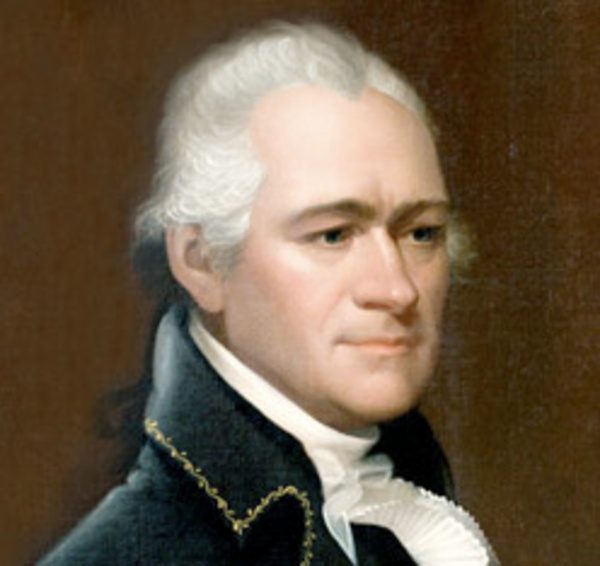
At a Glance
- The place
- Weehawken, New Jersey — a duelling ground on the Hudson River opposite New York City
- The date
- Dawn, 11 July 1804
- The men
- Aaron Burr, sitting vice president of the United States, and Alexander Hamilton, former secretary of the treasury
- The cause
- Burr demanded satisfaction after a published report that Hamilton had expressed a 'despicable opinion' of him during Burr's failed run for governor of New York
- The outcome
- Burr's shot struck Hamilton, who died in New York the following day, 12 July 1804
- The aftermath
- Burr was indicted for murder in New York and New Jersey, finished his term in political ruin, and never held high office again
Events on this day
- 1782British forces evacuate Savannah, Georgia, one of the last British-held cities of the American Revolutionary War.
- 1804Vice President Aaron Burr fatally wounds Alexander Hamilton in a duel at Weehawken, New Jersey — the featured story above.
- 1861Union troops under George B. McClellan win the Battle of Rich Mountain in western Virginia, a victory that helps lead to the creation of West Virginia.
- 1897Swedish engineer Salomon August Andrée launches his hydrogen balloon Örnen from Svalbard, aiming for the North Pole; he and his two companions are never seen alive again.
- 1905Members of the Niagara Movement, an early Black civil-rights organisation led by W. E. B. Du Bois, meet for the first time on the Canadian side of Niagara Falls.
- 1914Babe Ruth makes his major-league baseball debut, pitching the Boston Red Sox to a 4–3 win over Cleveland.
- 1955The United States Air Force Academy officially opens at temporary quarters at Lowry Air Force Base in Denver, Colorado.
- 1960Harper Lee's novel To Kill a Mockingbird is published in the United States.
- 1979Skylab, the first United States space station, breaks up on re-entry, scattering debris over the Indian Ocean and Western Australia; no one is injured.
- 1995President Bill Clinton establishes full diplomatic relations between the United States and Vietnam, two decades after the fall of Saigon.
Born on this day
- 1274Robert the Bruce — king of Scots who led Scotland to independence, crowned in 1306 and victor at Bannockburn.
- 1767John Quincy Adams — sixth president of the United States, son of the second president, John Adams.
- 1916Gough Whitlam — prime minister of Australia from 1972 until his controversial dismissal in 1975.
- 1934Giorgio Armani — Italian fashion designer who built one of the world's great luxury houses on relaxed, understated tailoring.
- 1953Leon Spinks — American boxer who took the world heavyweight title from Muhammad Ali in only his eighth professional fight.
Died on this day
- 1937George Gershwin — American composer of Rhapsody in Blue and Porgy and Bess, dead of a brain tumour at 38.
- 1974Pär Lagerkvist — Swedish novelist and Nobel laureate in literature, author of Barabbas.
- 1989Laurence Olivier — English actor and director, widely ranked the greatest stage actor of his century, dead at 82.
The featured story: Aaron Burr kills Alexander Hamilton in a duel, 11 July 1804
In the early republic, a gentleman's honour was a political asset, and duelling — illegal almost everywhere — remained its recognised, if disreputable, defence. Aaron Burr and Alexander Hamilton had been rivals for some fifteen years: New York lawyers, Revolutionary War veterans, and leaders of opposing parties, Hamilton a Federalist and Burr a Jeffersonian Republican. Hamilton had repeatedly worked to block Burr's rise, helping to deny him the presidency in the deadlocked election of 1800 and opposing his run for governor of New York in 1804. When a letter was published reporting that Hamilton had voiced a 'despicable opinion' of Burr at a dinner, Burr demanded an apology broad enough to cover years of insults. Hamilton refused, and the quarrel moved, by the ritual correspondence of seconds, toward pistols.
On the morning of 11 July 1804 the two parties rowed across the Hudson to the duelling ground at Weehawken, New Jersey — the same ledge where Hamilton's son Philip had been mortally wounded in a duel less than three years earlier. Dueling was banned in New York, and New Jersey's enforcement was laxer. The seconds measured ten paces. Both men fired. Hamilton's shot went wide, striking a tree; whether he deliberately threw it away, as a statement he left behind said he intended, has been argued ever since. Burr's shot struck Hamilton low in the abdomen, damaging his liver and lodging against his spine.
Hamilton was rowed back to New York in agony, telling the doctor, in the traditional account, 'This is a mortal wound.' He died the next afternoon, 12 July, surrounded by family and friends, after receiving communion from an Episcopal bishop who had at first refused it because of the duel. He was 47 or 49 — his birth year was disputed even in his lifetime. New York mourned on a scale that surprised even his allies, and the outcry turned decisively against Burr and against duelling itself in the North.
Burr finished his vice-presidential term under indictment for murder in two states, though he was never tried, and his later western intrigues ended in a treason trial and acquittal in 1807. He died in obscurity in 1836. Hamilton's reputation, by contrast, only grew: first secretary of the treasury, architect of the young republic's finances, and co-author of The Federalist Papers. The duel remains the starkest collision in American history between the code of honour and the politics of a modern state — settled, at ten paces, by the older code.
Why this date matters
July 11 keeps returning to contests of reputation and nerve. Its centrepiece is a pistol shot fired over a point of honour that destroyed both men's careers — one by death, the other by disgrace. Around it gather other wagers: Andrée's balloon drifting toward the Pole, Ruth stepping onto a major-league mound for the first time, Du Bois and his colleagues founding a movement, and a space station falling out of the sky over an empty desert. It is a day for gambles, some calculated and some fatal, and for the long shadows they cast.
Sources
- Encyclopaedia Britannica — On This Day: July 11
- HISTORY — What Happened on July 11
- Founders Online, National Archives — The Duel Between Aaron Burr and Alexander Hamilton
- Wikimedia Commons — Alexander Hamilton portrait by Ezra Ames

The facts on this page were checked against these sources on 19 November 2026. The History Trail's permanent pages are researched and written for this site; the live profiles elsewhere on The History Trail are assembled automatically from Wikipedia and Wikidata.
About the Author
Researched and written by the The History Trail Editorial Team — the accountable editorial function behind this site's permanent story pages. The team works from the published sources cited on each page; it does not invent historians, reviewers or credentials, and it corrects errors openly.
Fact Check
Every load-bearing fact on this page traces to one of the sources listed above, and significant claims link to their source in the text. Our checking method is described on the methodology page; errors can be reported via the corrections page.
Sources & Citations
Cite this page as: The History Trail Editorial Team, The History Trail — this article's title, publication and update dates are shown beneath its headline. The full source list appears under Sources above; the site's source standards are on the sources page.