
On This Day
February 3 in History
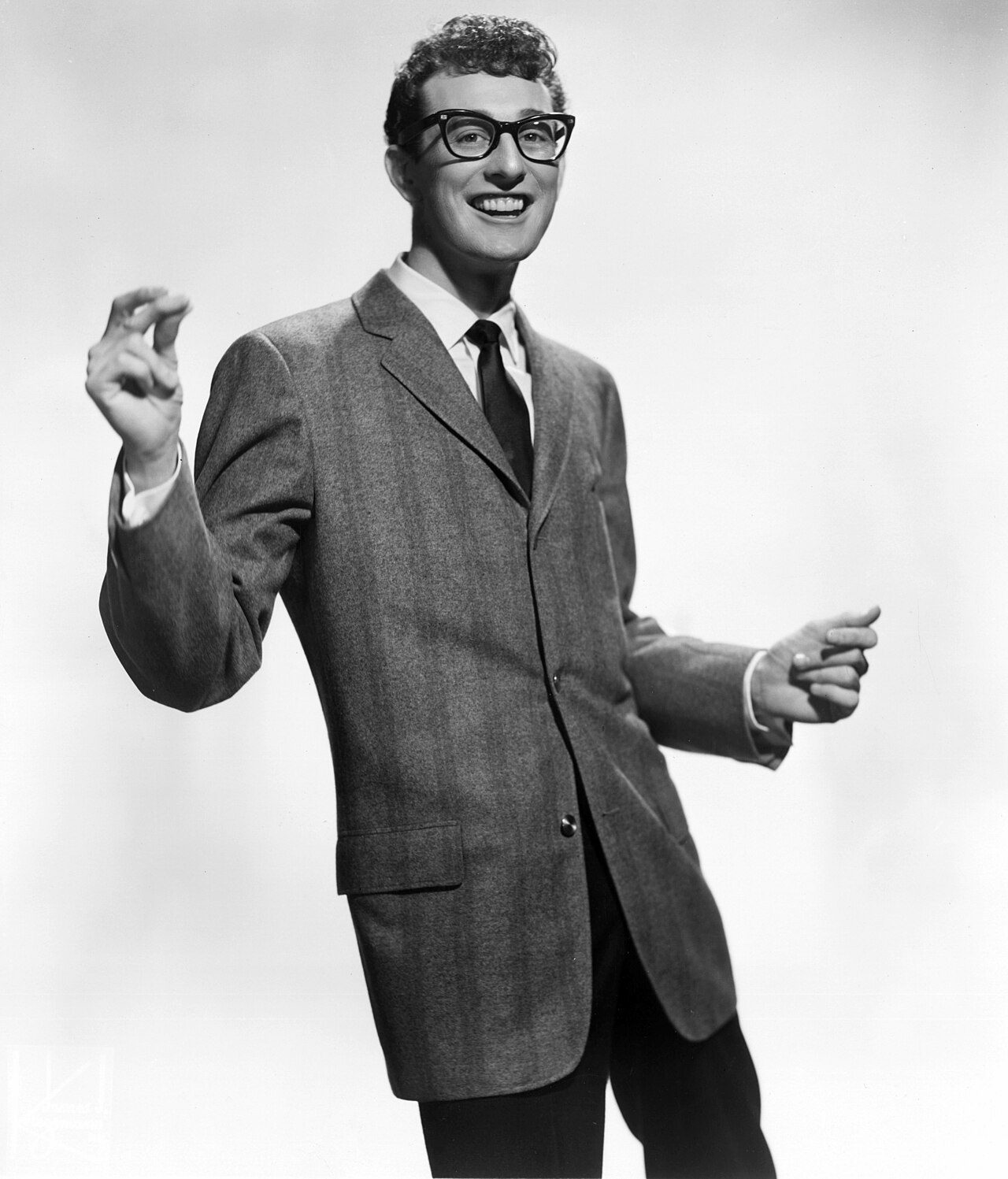
On 3 February 1959 a small plane crashed in an Iowa cornfield, killing Buddy Holly, Ritchie Valens and J. P. 'The Big Bopper' Richardson — the tragedy later named the Day the Music Died. February 3 is also the day the Fifteenth Amendment was ratified, Luna 9 landed on the Moon, and Woodrow Wilson died.
Choose another date: open the On This Day calendar to browse events, births and deaths for any day of the year.
At a Glance
- The crash
- A chartered Beechcraft Bonanza crashed shortly after takeoff from Mason City, Iowa, in the early hours of 3 February 1959
- The dead
- Buddy Holly, 22; Ritchie Valens, 17; J. P. Richardson, the 'Big Bopper', 28; and pilot Roger Peterson, 21
- The tour
- The Winter Dance Party, a gruelling 24-cities-in-24-days tour travelling in unheated buses
- The last show
- The Surf Ballroom in Clear Lake, Iowa — declared a National Historic Landmark in 2021
- The name
- Don McLean called it 'the day the music died' in his 1971 song American Pie
- The near-misses
- Waylon Jennings gave up his seat to Richardson; Tommy Allsup lost a coin toss to Valens
Events on this day
- 1863Samuel Clemens publishes under the pen name Mark Twain for the first time, in the Virginia City Territorial Enterprise.
- 1690The Massachusetts Bay Colony issues the first paper money in the American colonies, to pay soldiers returning from an expedition against Quebec.
- 1870The Fifteenth Amendment to the U.S. Constitution is ratified, prohibiting the denial of the vote on account of race, colour or previous servitude.
- 1913The Sixteenth Amendment is ratified, giving the U.S. federal government the power to levy an income tax.
- 1916A fire destroys the centre block of Canada's Parliament buildings in Ottawa, killing seven people.
- 1917The United States severs diplomatic relations with Germany after its announcement of unrestricted submarine warfare.
- 1944American forces complete the capture of the Marshall Islands from Japan in the Pacific War.
- 1953Jacques Cousteau publishes The Silent World, the book that introduces millions of readers to the undersea world he explored.
- 1959Buddy Holly, Ritchie Valens and the Big Bopper are killed in a plane crash near Clear Lake, Iowa — the featured story above.
- 1966The Soviet probe Luna 9 makes the first successful soft landing on the Moon and transmits photographs from its surface.
- 1994President Bill Clinton lifts the nineteen-year-old United States trade embargo on Vietnam.
- 1995Eileen Collins becomes the first woman to pilot a space shuttle, aboard Discovery.
Born on this day
- 1809Felix Mendelssohn — German composer of the early Romantic era, child prodigy and reviver of Bach's music.
- 1811Horace Greeley — American newspaper editor, founder of the New-York Tribune and presidential candidate.
- 1821Elizabeth Blackwell — the first woman to receive a medical degree in the United States.
- 1874Gertrude Stein — American writer and Paris art patron, at the centre of the modernist avant-garde.
- 1894Norman Rockwell — American painter and illustrator whose Saturday Evening Post covers defined small-town America.
- 1970Warwick Davis — English actor, star of Willow and a familiar face in the Star Wars and Harry Potter films.
Died on this day
- 1468Johannes Gutenberg — German craftsman whose printing system transformed the spread of knowledge in Europe.
- 1924Woodrow Wilson — twenty-eighth president of the United States, who led the country through the First World War, dead at 67.
- 1959Buddy Holly — American rock and roll pioneer, killed in the Clear Lake plane crash at 22, with Ritchie Valens and the Big Bopper.
- 1975Umm Kulthum — Egyptian singer, the 'Star of the East' and the most beloved voice in the Arab world, dead in Cairo.
- 1989John Cassavetes — American actor and director, the godfather of independent cinema.
The featured story: the Day the Music Died, 3 February 1959
The Winter Dance Party of 1959 was rock and roll's first great package tour and a logistical disaster. Twenty-four cities in twenty-four days across the frozen Upper Midwest, travelling in converted school buses whose heating systems kept failing, in one of the coldest winters on record. Musicians caught flu and frostbite; the drummer Carl Bunch was hospitalised. By the time the tour reached Clear Lake, Iowa, on 2 February, its biggest star had had enough. Buddy Holly — twenty-two years old, married, with a string of hits from 'That'll Be the Day' to 'Peggy Sue' and 'Rave On' — decided to charter a plane to the next stop, Fargo, North Dakota, so he and his band could rest and do laundry.
The aircraft was a four-seat Beechcraft Bonanza from the Dwyer Flying Service in nearby Mason City, and it had room for only three passengers. Holly's bassist, a young Waylon Jennings, gave up his seat to J. P. Richardson — the disc jockey turned singer known as the Big Bopper, famous for 'Chantilly Lace', who was ill with flu. Holly's guitarist Tommy Allsup agreed to flip a coin with the tour's seventeen-year-old breakout star, Ritchie Valens, whose 'La Bamba' and 'Donna' were in the charts; Valens called heads and won the last seat. As the band parted, Jennings joked with Holly — 'I hope your ol' plane crashes' — a remark that haunted him for the rest of his life.
The Bonanza took off from Mason City Municipal Airport at about 12:55 a.m. on 3 February, into falling snow and rising wind. Its pilot, Roger Peterson, was twenty-one and, as investigators later established, was not qualified to fly on instruments alone — the only way to fly that night. Within minutes the plane, apparently in a steep descent its pilot did not recognise, struck a cornfield at high speed about six miles from the airport. All four men were killed on impact. The wreckage was found after dawn, the musicians' bodies thrown clear into the snow.
The crash cut off three careers at radically different points: Holly, already a songwriter of genius whose work would shape the Beatles and Bob Dylan; Valens, the first Mexican-American rock star, dead at seventeen; and Richardson, a broadcaster-entrepreneur who had, a year earlier, filmed promotional clips for his songs that are now credited among the first music videos. The loss was mourned at the time, but it was Don McLean's 1971 epic 'American Pie' that fixed its meaning for posterity, naming 3 February 1959 'the day the music died'. The Surf Ballroom, where the three played their last show, still stands in Clear Lake and hosts an annual Winter Dance Party memorial.
Why this date matters
February 3 is a day of paper and wings. Paper money first appeared in the American colonies in 1690, the Fifteenth and Sixteenth Amendments remade American citizenship and taxation in 1870 and 1913, and Cousteau's Silent World opened the oceans to readers in 1953. But the date is remembered for a flight: three musicians who climbed into a small plane to escape a freezing bus in 1959 and never arrived, and — seven years later — a Soviet capsule that floated down to the first soft landing on the Moon. Ambition, fragile machines and winter weather run through the whole day.
Sources
- Encyclopaedia Britannica — On This Day: February 3
- HISTORY — What Happened on February 3
- Mental Floss — February 3, 1959: The Day the Music Died
- Guinness World Records — The Big Bopper and the first music videos
The facts on this page were checked against these sources on 19 November 2026. The History Trail's permanent pages are researched and written for this site; the live profiles elsewhere on The History Trail are assembled automatically from Wikipedia and Wikidata.
About the Author
Researched and written by the The History Trail Editorial Team — the accountable editorial function behind this site's permanent story pages. The team works from the published sources cited on each page; it does not invent historians, reviewers or credentials, and it corrects errors openly.
Fact Check
Every load-bearing fact on this page traces to one of the sources listed above, and significant claims link to their source in the text. Our checking method is described on the methodology page; errors can be reported via the corrections page.
Sources & Citations
Cite this page as: The History Trail Editorial Team, The History Trail — this article's title, publication and update dates are shown beneath its headline. The full source list appears under Sources above; the site's source standards are on the sources page.